Complete Guide to the eVisa Zimbabwe: Requirements, Fees, and Travel Steps
The eVisa Zimbabwe (a visa applied for and paid online) lets UK tourists get their visa approved before departure. British passport holders pay US$ 55 for single entry and US$ 70 for double entry, and processing takes an average of 7 working days. This guide covers eligibility, costs, documents, the application process, and what happens at the border. For a country-specific deep dive, see our Zimbabwe visa guide for British passport holders.
This is an independent guide for UK-based travellers - we're not a government site, and we don't take payments or file applications on your behalf. We walk you through the whole journey and point you to the official portal so you can confirm current fees and rules before you fly.
What the eVisa Zimbabwe Actually Is
You apply online, but what you receive isn't a visa in your passport. It's a Letter of Authority - a PDF with a QR code confirming that Zimbabwe's Department of Immigration has pre-cleared your entry. The physical stamp or foil goes into your passport only when an officer processes you at the port of entry.
The authorisation covers tourism, safaris, family visits, and short leisure stays. Applications are handled online, and the Embassy of Zimbabwe in London no longer issues visas; the visa itself is issued at the port of entry. If you're unsure what the approval document actually is, our guide to the eVisa approval letter printout explains delivery, boarding checks, and scam warnings.
- The eVisa is a digital pre-authorisation, not a sticker or ink stamp.
- You receive a Letter of Authority PDF by email after approval.
- Immigration converts it into an entry stamp when you arrive.
- Tourism, safari, and family visits all fall under the same category.
- No embassy visit is needed at any point.
Who Needs an eVisa for Zimbabwe?
If you hold a British passport, you're in Category B - you can apply for an eVisa online before you travel or get a Visa on Arrival at the border. Zimbabwe sorts nationalities into three tiers, and your tier decides everything.
| Category | Who it covers | What you can do |
|---|---|---|
| A - visa exempt | 46+ countries, incl. South Africa, Botswana, Zambia, Kenya, Malawi | Enter without a visa for tourism |
| B - eVisa or VoA | 100+ countries, incl. UK, USA, most EU, Canada, Australia | Apply for an eVisa online or buy a visa on arrival |
| C - advance eVisa only | 50+ countries, incl. Pakistan, Nigeria, Thailand, Morocco | Must get eVisa approval before travel; no visa on arrival |
Travelling on two passports? If you hold both citizenships, you can enter on your Zimbabwean passport and no visa is needed; on the British passport alone the Category B fees apply. For the return to the UK you must carry a valid British passport or certificate of entitlement.
eVisa in Advance or Visa on Arrival?
Both routes are open to you as a UK citizen, but they're not equal. The visa on arrival means queueing at the desk and paying there. We compare the two options in detail in our visa on arrival vs eVisa comparison.
At busy arrival times the visa-on-arrival queue can be long, while pre-approved travellers are processed faster. At the border you can pay in cash or by card, so it is sensible to carry US dollars in small notes. For a first-hand look at the arrival experience, see our guide to the Victoria Falls Airport visa on arrival queue.
| eVisa in advance | Visa on arrival | |
|---|---|---|
| Payment | Online card payment before departure | Card at the desk, or USD cash |
| Queue at the airport | Short - pre-approved counter | Long at busy arrival times |
Our recommendation: if you're travelling in peak season, get the eVisa before you fly. You'll walk past the payment queue with your printed Letter of Authority.
What the eVisa Zimbabwe Costs UK Citizens
Here's where many UK travellers get caught out: British and Irish passport holders are charged higher fees than the standard Category B rates paid by most other nationalities. For a full breakdown in both currencies, see our Zimbabwe eVisa cost guide.
| Visa type | UK citizens | Standard Category B rate | Validity window to enter |
|---|---|---|---|
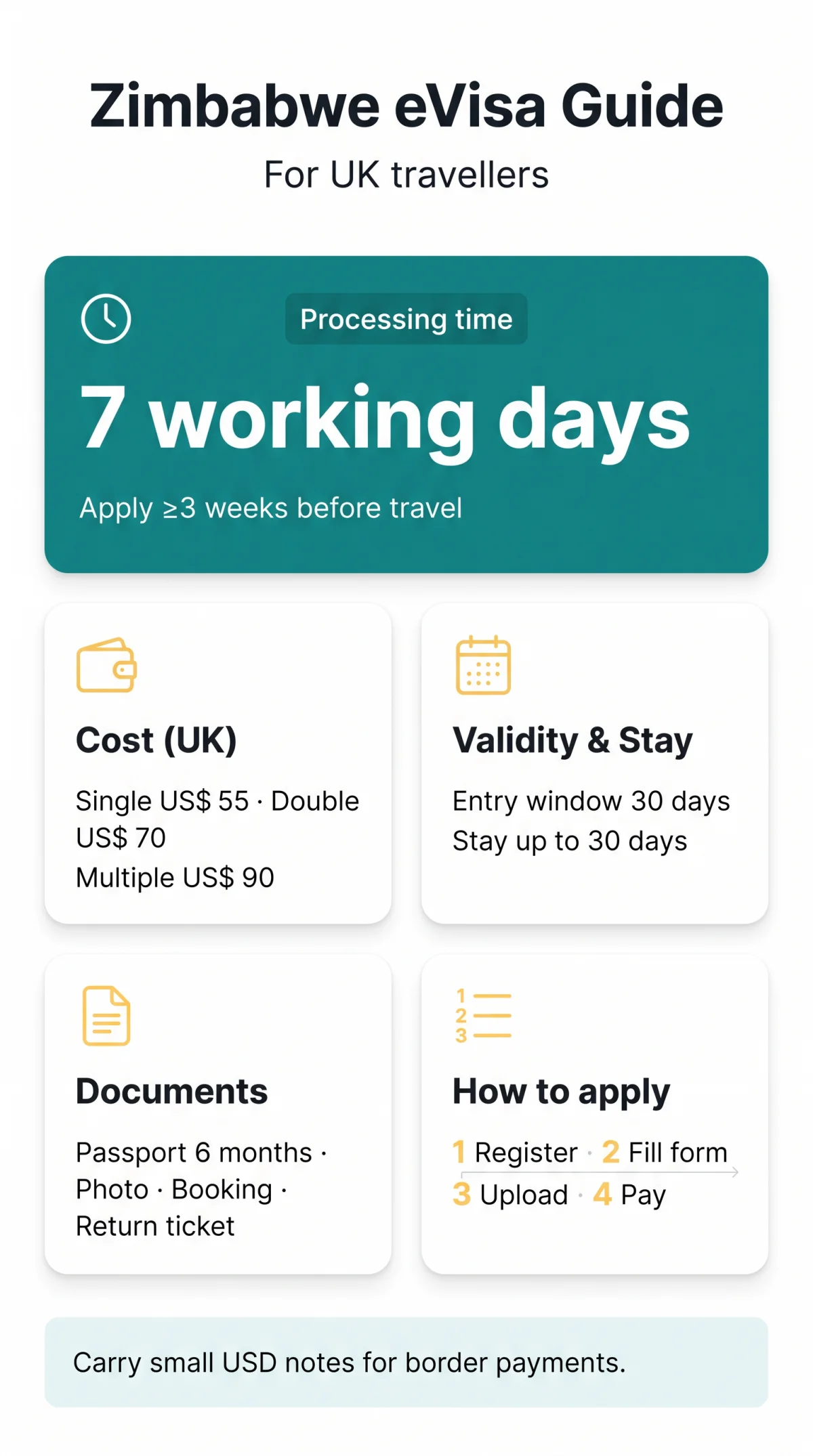
| Single Entry | US$ 55 | US$ 30 | 30 days from issue |
| Double Entry | US$ 70 | US$ 45 | 90 days from issue |
| Multiple Entry | US$ 90 | US$ 55 | 6 months from issue |
A Multiple Entry visa costs US$ 90 for UK passport holders and can be applied for online; UK, US and Canadian travellers can also obtain a multiple entry visa on arrival. Children pay the full fee at any age, including infants. And note: the fee is non-refundable, even if your application is denied or you never use the visa.
Validity Window vs Length of Stay
Two different clocks run on your eVisa, and mixing them up is a classic mistake. The validity window is how long you have to enter Zimbabwe after the visa is issued. The length of stay is how long you can remain once you're stamped in. We break down the differences in our single vs double entry visa validity comparison.
A Single Entry visa gives you 30 days from issue to enter. Once you're at the desk, the officer grants a stay of up to 30 days for tourism. A Single Entry visa dies the moment you leave Zimbabwe; a Double Entry lets you pop over to Zambia and come back within the same window.
Don't confuse the two 30s. The entry window runs from the date of issue, while your permitted stay is counted from your arrival date and stamped separately by the officer.
Documents and Passport Specifications
Get these right before you start the form and the rest is straightforward. Your passport needs at least 6 months of validity from your arrival date and 3 blank pages, in case you need to exit through a neighbouring country or leave at short notice. Our article on eVisa requirements for UK travellers covers the passport rules in full, and the complete eVisa documents checklist lists every file you'll upload.
Passport Scan Technical Specs
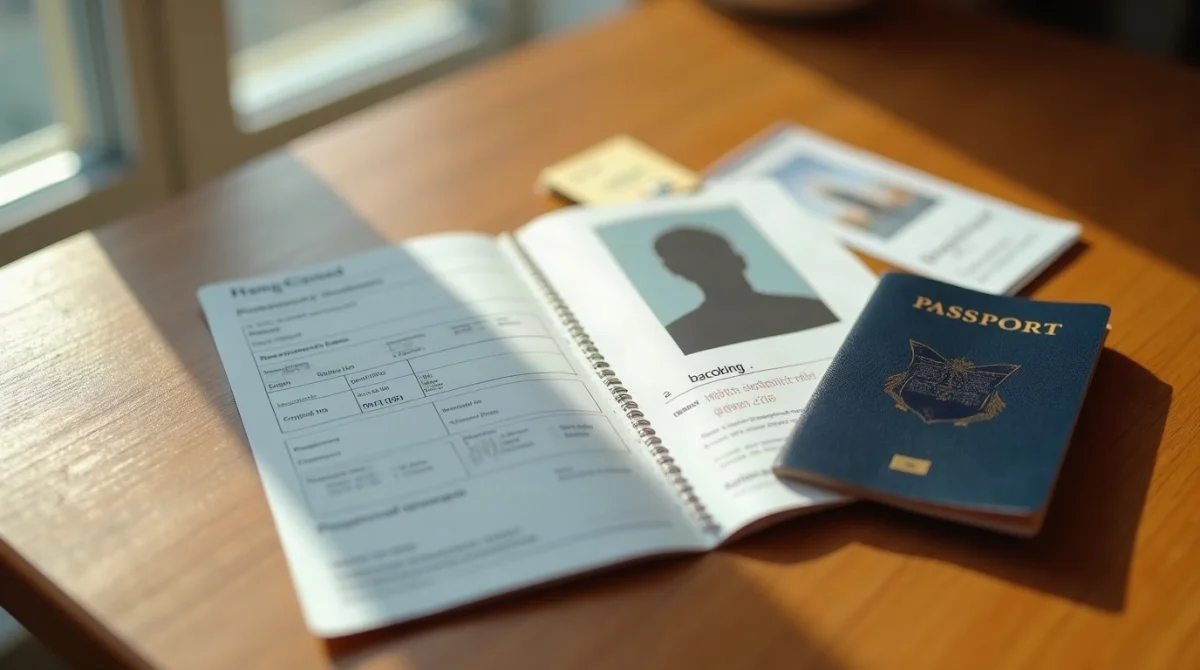
- Scan the bio-data page of your passport as a clear, uncropped image.
- The Machine-Readable Zone (MRZ) - the two lines of characters at the bottom - must be fully readable.
- No glare, no cut-off corners, no blur on the photo.
Supporting Documents
- A recent colour passport-style photo of the applicant.
- Accommodation confirmation: hotel booking, safari lodge reservation, or a host's invitation letter with their contact details.
- Proof of a return or onward ticket (or funds to buy one) and sufficient funds for your stay.
- A Yellow Fever Certificate - only if you're arriving from a yellow fever risk country.
- A copy of any previous Zimbabwe visa, if you've had one.
How to Apply for the eVisa Zimbabwe Online
Four steps, done in one sitting if your documents are ready. The whole application lives on evisa.gov.zw - the government portal run by the Department of Immigration. Our step-by-step Zimbabwe eVisa application walkthrough shows every screen of the form.
Step 1: Register on the Portal
Go to the portal address directly and create a user account, then verify your email. Stick to that address only - agencies may charge a service fee on top of the government fee for the same application, and sites that present themselves as the immigration authority are not affiliated with it.
Step 2: Fill In the Application Fields
The form asks for your personal and passport details, marital status, occupation, home address, and your first night's accommodation in Zimbabwe. You'll also declare your intended port of entry, previous visits, and any accompanying spouse or children.
One field deserves extra care: your name. It must match your passport's MRZ exactly, middle names included. A mismatch with your travel document makes the eVisa invalid; you then either contact the Immigration Department for an amendment or submit and pay for a new application.
Step 3: Upload Your Documents
Attach the passport scan and photo to your application.
Step 4: Pay and Save Your Reference Number
Complete payment through the gateway and write down your Application Reference Number. You'll use it to track your status, and it's your proof of a submitted application if anything goes wrong later. For everything about cards, fees, and receipts, see our guide to Zimbabwe visa payment methods online.
When the Portal Fights Back: Payment Troubleshooting
Online card payments sometimes fail on the portal. If that happens, your application stays in the system and you can pay on arrival. If login or upload errors are also giving you trouble, our guide to fixing the eVisa portal when it's not working covers the most common failures.
Here's what to do, in order:
That last step matters: you don't need to re-apply. The application is already in the system, and the desk can take payment in cash or by card.
Processing Times and Checking Your Status
Approval takes an average of 7 working days. Applications should be submitted at least 3 weeks before travel, which leaves room for public holidays or extra document checks. Our article on realistic eVisa processing times explains how to plan around delays.
Log back into the account you created on the portal and use the 'Track your application' page on evisa.gov.zw to check progress; further notices are also sent to you by email. For more detail, see our guide on how to track your eVisa application status with your reference number.
Once approved, three things happen in quick succession:
A sensible timeline: apply at least three weeks out, print the letter as soon as it arrives, and fly.
Arrival: What Happens at the Border
At the desk you hand over three things: your passport, a printed Letter of Authority, and the Immigration Declaration Form, which you can complete online before travel or at the counter on arrival. Our guide to the Zimbabwe entry declaration form IF1 shows exactly how to fill it in. When your passport is scanned, the visa is stamped without further formalities.
Designated Entry Points
The pre-approved eVisa is accepted at more border posts than just Victoria Falls - our overview of the ports of entry accepting the Zimbabwe eVisa lists them all.
- Airports: Robert Gabriel Mugabe International (Harare), Victoria Falls International, Joshua Mqabuko Nkomo International (Bulawayo).
- Land borders: Beitbridge (South Africa), Chirundu and Kariba (Zambia), Plumtree (Botswana), Victoria Falls border, Forbes-Mutare and Nyamapanda (Mozambique).
At the Desk
The officer checks your documents and stamps the visa into your passport. Before you walk away, check the date on the stamp - that's what governs your stay, not the number you typed into the application.
Cash at Immigration
If you're paying at the border, take enough US dollars in small notes.
Zimbabwe eVisa or KAZA Univisa?
Combining Victoria Falls with Livingstone and a day trip to Chobe? The KAZA Univisa might serve you better. It costs US$ 50, is valid for 30 days from issue, and lets you cross between Zimbabwe and Zambia as often as you like, plus day trips into Botswana through the Kazungula border post. See our full analysis of the KAZA Univisa price for British tourists.
| Standard eVisa | KAZA Univisa | |
|---|---|---|
| Cost (UK citizen) | US$ 55 single / US$ 70 double | US$ 50 |
| Geographic scope | Zimbabwe only | Zimbabwe + Zambia, Botswana day trips |
| Overnight in Botswana | Allowed with Double Entry | Invalidates the visa |
| Best for | Zimbabwe-only or Botswana overnight trips | Vic Falls + Livingstone + Chobe day trip |
Now the trap. Say you book two nights at a safari lodge in Chobe National Park. When you return through Kazungula, your KAZA Univisa is void - an overnight stay in Botswana cancels it - and you'd have to buy a new Single Entry visa (US$ 55) on the spot. If Botswana overnights are in your plans, apply for a Double Entry Zimbabwe eVisa instead.
Children and Customs Rules
Travelling with kids? Children under 16 can't apply on their own; they must be included in the accompanying adult's application, and full visa fees apply at any age, including infants. Our guide to Zimbabwe visa requirements for minors covers the family paperwork. If your route passes through South Africa, check that country's rules for travelling with children.
On the money side: declare any cash of US$ 10,000 or more when you enter, and it is illegal to leave Zimbabwe with cash worth more than US$ 2,000.
Extending Your Stay
Want longer than 30 days? You can extend your tourist stay up to a cumulative 90 days free of charge - but only in person, before your stamp expires. Extensions are done at a Department of Immigration office; the head office is in Harare, at the corner of Herbert Chitepo and Leopold Takawira.
Beyond 90 days, each 30-day extension costs US$ 20, rising to US$ 100 per extension after six months. The maximum tourist stay is 12 months. Check the number of days stamped on arrival and apply for an extension before that date expires.
Common Mistakes and How to Avoid Them
- Name or passport number typo. A mismatch makes the eVisa invalid. Check every character against the MRZ before paying.
- Unreadable uploads. A shadowed photo or glare on the scan stalls your application. Keep the scan sharp and the MRZ fully visible.
- Single Entry instead of Double. Planning the Zambian side of Victoria Falls? A Single Entry visa ends when you cross. Map your itinerary before choosing the visa type.
- Digital-only approval letter. Print the Letter of Authority and keep a copy with your travel documents.
- Short of US dollars at the border. If you might be paying at the desk, take enough US dollars in small notes before you fly.
- Application refused. If things still go wrong, our article on what to do after a Zimbabwe visa rejection explains your options.
Frequently Asked Questions (FAQ)
Do British citizens need an eVisa for Zimbabwe before travelling?
No, it's optional. UK citizens are Category B, so they can apply online in advance or get a Visa on Arrival at the port of entry. Applying first means shorter queues at the airport.
How much does the eVisa Zimbabwe cost for a UK passport holder?
US$ 55 for Single Entry and US$ 70 for Double Entry, higher than the US$ 30 / US$ 45 standard Category B rates. Multiple Entry costs US$ 90 and is available online or, for UK, US and Canadian passports, on arrival.
How long does it take to process a Zimbabwe tourist eVisa?
An average of 7 working days. Apply at least 3 weeks before departure to allow for holidays or verification delays.
Is the eVisa approval letter a physical visa?
No. The Letter of Authority is an electronic entry permit confirming pre-clearance. You present a printed copy at immigration, and the officer then stamps your passport with the actual entry endorsement.
Can I use the KAZA Univisa instead of a standard Zimbabwe eVisa?
Yes, if your trip focuses on Victoria Falls and Livingstone. It costs US$ 50, allows 30 days of Zimbabwe - Zambia crossings, and covers Chobe day trips. Any overnight stay in Botswana invalidates it.
What US Dollar bills are accepted for fees and border payments in Zimbabwe?
Take enough US dollars with you in small notes to pay for your visa if you're paying at the border; the desk can also take payment by card.
Can I extend my stay beyond the initial 30 days?
Yes, up to a cumulative 90 days free of charge. Visit a Department of Immigration office in person before your stamp expires; the head office is in Harare, at the corner of Herbert Chitepo and Leopold Takawira.
What documents do I need to apply for a Zimbabwe eVisa online?
A passport scan (valid 6 months, 3 blank pages), a recent passport-style photo, confirmed accommodation, a return or onward ticket plus funds for your stay, and a copy of any previous Zimbabwe visa. Add a Yellow Fever Certificate only if arriving from a risk country. Apply at evisa.gov.zw.
Can UK-Zimbabwe dual nationals enter on their British passport without a visa?
No. A Zimbabwean passport gets you in without a visa, but on the British passport alone the Category B fees apply. Whichever you use to enter, you must carry a valid British passport or certificate of entitlement for the return to the UK.
Sources and Further Reading
- evisa.gov.zw - the government portal where you register, apply, pay, and track your application.
- Zimbabwe eVisa FAQs - answers on processing times, validity windows, and amendment rules.
- FCDO travel advice for Zimbabwe - UK government guidance on fees, passport rules, and border regulations.
- Electronic Visa Application - additional guidance from the Zimbabwe Embassy in Botswana.
Rules and fees can change, so confirm current details on the portal before you travel.